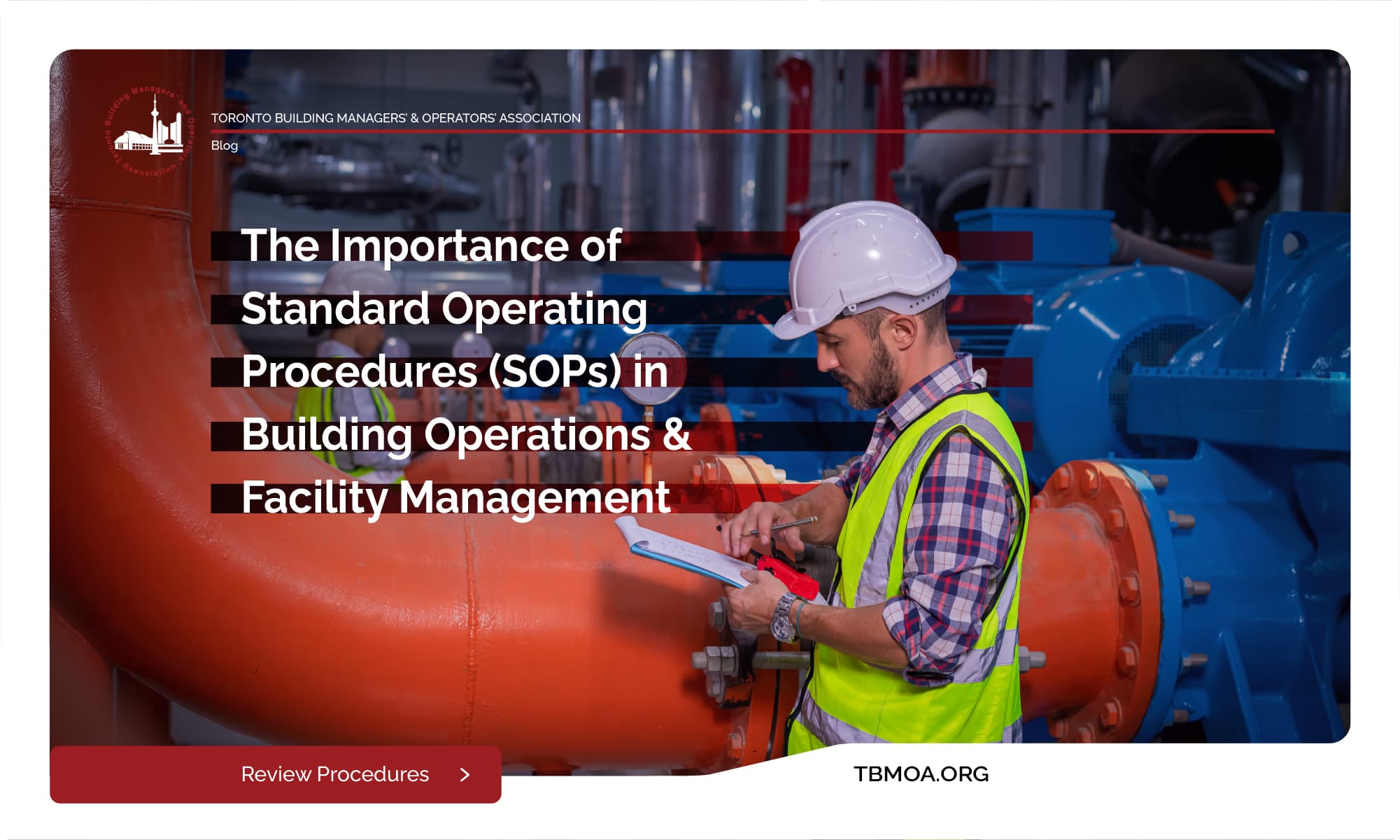
The Importance of Standard Operating Procedures (SOPs) in Building Operations and Facility Management
In the world of building operations and facility management, consistency is critical. Whether responding to an HVAC alarm, conducting a cooling tower inspection, performing a chiller startup, or managing an emergency shutdown, building operators are responsible for maintaining safe, reliable, and efficient facility operations. Standard Operating Procedures (SOPs) provide a structured approach to performing these tasks, ensuring that work is completed consistently, safely, and in accordance with organizational and regulatory requirements. SOPs are widely recognized as valuable tools for improving operational performance, safety, training, and compliance.
What Are SOPs?
A Standard Operating Procedure (SOP) is a documented set of instructions that outlines the steps required to perform a task or operate equipment safely and effectively. SOPs provide operators with clear guidance on how to complete routine and non-routine activities while maintaining consistent standards throughout the facility. Regulatory and safety organizations recognize SOPs as important tools for controlling operations and reducing workplace risks. In a commercial, institutional, or industrial building, SOPs may cover:
- Boiler operation
- Cooling tower operation
- Chiller startup and shutdown procedures
- Generator testing
- Fire alarm response
- Lockout/Tagout (LOTO)
- Emergency response procedures
Improving Safety for Operators and Occupants
Safety is one of the most important reasons for developing and maintaining SOPs. Building operators routinely work around electrical systems, rotating equipment, steam systems, chemicals, confined spaces, and high-pressure hydronic systems. Without standardized procedures, the risk of injury, equipment damage, and service interruptions increases significantly. OSHA recognizes the importance of documented procedures and training in helping organizations establish safer work environments. Well-written SOPs help operators:
- Identify hazards before beginning work
- Follow proper lockout/tagout procedures
- Use appropriate personal protective equipment (PPE)
- Respond effectively during emergencies
- Reduce the likelihood of human error
By standardizing safe work practices, facility managers can create a stronger safety culture and reduce operational risk.
Protecting Critical Building Assets
Modern buildings contain millions of dollars' worth of equipment, including chillers, boilers, cooling towers, pumps, air handling units, generators, and building automation systems. Improper operation can shorten equipment life, increase maintenance costs, and lead to costly failures. SOPs provide operators with detailed instructions on proper startup, shutdown, inspection, and maintenance procedures to help protect these assets and maximize their life expectancy. For example:
- A cooling tower water treatment SOP can reduce scaling and corrosion.
- A pump maintenance SOP can minimize bearing and seal failures.
- A generator testing SOP can verify emergency readiness.
Supporting Training and Knowledge Transfer
One of the greatest challenges in facility management is the loss of institutional knowledge when experienced operators retire, transfer to other facilities, or leave the industry. Many buildings rely heavily on the experience and judgment of senior operators who have spent years learning the unique characteristics of their equipment and systems. When that knowledge is not documented, organizations become vulnerable to operational disruptions, longer troubleshooting times, and inconsistencies in system operation. SOPs help preserve this expertise by documenting equipment operating sequences, site-specific procedures, troubleshooting methods, emergency response protocols, and operational best practices developed over time. As a result, critical knowledge remains accessible to both current and future staff members. SOPs also provide new operators with a structured learning framework, reducing onboarding time and helping them gain confidence in performing operational tasks safely and consistently
Supporting Regulatory and Organizational Compliance
Facility managers are responsible for ensuring that building operations comply with a wide range of safety, environmental, insurance, and organizational requirements. Demonstrating compliance often requires evidence that operational activities are performed according to approved and standardized procedures. SOPs provide this documentation by clearly defining how work is to be completed and by establishing consistent expectations for operators and contractors. In addition to supporting regulatory compliance, SOPs strengthen internal governance by promoting accountability and operational discipline. They also provide valuable documentation during safety audits, environmental inspections, insurance assessments, and internal reviews. By maintaining current and accurate SOPs, facility managers demonstrate due diligence while reinforcing a culture focused on safety, reliability, and operational excellence
Conclusion
References
For building operators and facility managers, SOPs are far more than administrative documents. They are essential operational tools that improve safety, increase consistency, protect critical assets, support training, enhance emergency preparedness, and promote regulatory compliance. The best-performing facilities are not dependent on individual knowledge alone. Instead, they rely on documented procedures that capture best practices and ensure every operator can perform tasks safely and effectively. Investing time in developing, reviewing, and updating SOPs is one of the most valuable actions a facility management team can take to improve reliability, efficiency, and long-term operational success.